Greeting card
COUPLE OF RABBITS
Text on the reverse side: Rabbits are associated to cleverness and self-devotion. Woodblock print by Kōno Bairei (1844-1895).
Greeting card
Text on the reverse side: Rabbits are associated to cleverness and self-devotion. Woodblock print by Kōno Bairei (1844-1895).
Greeting card
Text on the reverse side: A contemporary cowboy adaptation of a Japanese woodblock print dating 1814. The Japanese word for frog is “kaeru”, which...
View full details
Greeting card
Text on the reverse side:A contemporary William Morris adaptation of a Japanese woodblock print dating 1814. The Japanese word for frog is “kaeru”,...
View full details
Greeting card
Text on the reverse side:A contemporary scientist adaptation of a Japanese woodblock print dating from 1814. The Japanese word for frog is “kaeru”,...
View full details
Greeting card
Text on the reverse side:White is the colour of purity, innocence, wholeness and completion. In this image, these attributes are combined with the ...
View full details
Greeting card
Text on the reverse side: A symbol of enduring happiness, the plum blossom has traditionally been used as a decorative symbol for congratulatory o...
View full details
Greeting card
Text on the reverse side:The waxwing totem is believed to teach selflessness whilst encouraging us to give to others for their benefit, without cal...
View full details
Greeting card
Text on the reverse side:Temples and shrines often associated themselves with dragons. The mythical being has traditionally been celebrated for its...
View full details
Greeting card
Text on the reverse side:In the Japanese system of Hana-kotoba (flower meanings), the magnolia flower means the sublime, and love of nature, reinvi...
View full details
Greeting card
Text on the reverse side:The name nandina (also known as heavenly bamboo or sacred bamboo in Japan and China) with sprays of bright red berries, is...
View full details
Art Print
A contemporary doctor adaptation of a Japanese woodblock print from 1814. The Japanese word for frog is “kaeru”, which can also mean “to return”, s...
View full details
Greeting card
Text on the reverse side:The egret is appreciated as an auspicious symbol in many cultures. In China, the egret symbolises strength, purity, patien...
View full details
Art Print
A contemporary Dr. Watson adaptation of a Japanese woodblock print dating 1814. The Japanese word for frog is “kaeru”, which can also mean “to retu...
View full details
Greeting card
Text on the reverse side:A contemporary army adaptation of a Japanese woodblock print from 1814. The Japanese word for frog is “kaeru”, which can a...
View full details
Art Print
Peacocks represent new growth, longevity, love, and success in relationships and careers. With the one hundred eyes on its tail, they are said to r...
View full details
Greeting card
Text on the reverse side: A contemporary Roman/Greek goddess adaptation of a Japanese woodblock print dating 1814. The Japanese word for frog is “...
View full details
Greeting card
Text on the reverse side:Elephants symbolise strength and power of the body and spirit, whilst also representing wisdom, loyalty, stability and det...
View full details
Art Print
The blooming of cherry blossoms is a symbol of purity. Their spectacular bloom is enjoyed by many, but for only a short time each year, reminding u...
View full details
Greeting card
Text on the reverse side:The artist Koson Ohara was a Japanese painter and printmaker in the late 19th and early 20th century. With some 500 works ...
View full details
Greeting card
Text on the reverse side:The artist Koson Ohara was a Japanese painter and printmaker in the late 19th and early 20th century. With some 500 works ...
View full details
Greeting card
Text on the reverse side:Commonly the deer represents the power to deal with challenges and the ability to be swift and vigilant, calling for peopl...
View full details
Greeting card
Text on the reverse side:A contemporary knight in armour adaptation of a Japanese woodblock print dating from 1814. The Japanese word for frog is “...
View full details
Greeting card
Text on the reverse side:A contemporary Japanese male adaptation of a Japanese woodblock print dating from 1814. The Japanese word for frog is “kae...
View full details
Greeting card
Text on the reverse side:A contemporary martial arts adaptation of a Japanese woodblock print dating 1814. The Japanese word for frog is “kaeru”, w...
View full details
Bookmark
Text on the reverse side: A contemporary Shakespeare adaptation of a Japanese woodblock print dating 1814. The Japanese word for frog is “kaeru”, ...
View full details
Art Print
A contemporary romantic adaptation of a Japanese woodblock print from 1814. The Japanese word for frog is “kaeru”, which can also mean “to return”,...
View full details
Art Print
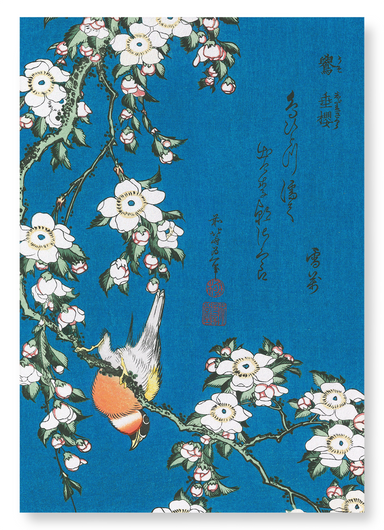
The haiku poem reads: “A single bird emerges, drenched by dew from morning cherry blossoms.” Depicting the calm scene of nature with a tranquil bea...
View full details
Greeting card
Text on the reverse side:The butterfly can symbolise lightness and playfulness, whilst representing the powerful meaning of transformation, growth ...
View full details
Art Print
The combination of the bush warblers and plum blossoms can be found often in Japanese art as symbols of Spring. Expressive of enduring happiness, t...
View full details
Greeting card
Text on the reverse side:As a sturdy plant able to grow in the harshest environment, the ivy symbolises perennial life and immortality. By Japanese...
View full details
Greeting card
Text on the reverse side:The egret is appreciated as an auspicious symbol in many cultures. In China, the egret symbolises strength, purity, patien...
View full details
Art Print
A contemporary Lady Gatsby adaptation of a Japanese woodblock print dating 1814. The Japanese word for frog is “kaeru”, which can also mean “to ret...
View full details
Art Print
The parrot symbolism is said to invoke hope, promise and the ability to achieve new goals with confidence. The bird also represents joy, happiness ...
View full details
Greeting card
Text on the reverse side:Expressive of enduring happiness, the plum blossom has traditionally been used as a decorative symbol of congratulatory oc...
View full details
Art Print
A contemporary rainbow adaptation of a Japanese woodblock print dating 1814. The Japanese word for frog is “kaeru”, which can also mean “to return”...
View full details
Greeting card
Text on the reverse side:In Japan, the monkey is a sacred guardian against negativity and misfortune. The persimmon fruit is a symbol of transforma...
View full details