Art Print
NEW INN HALL COLLEGE CREST
This card is based on a chromolithographic college crest designed by Albert Henry Warren and published in Oxford, by T. and G. Shrimpton in 1869.
Art Print
This card is based on a chromolithographic college crest designed by Albert Henry Warren and published in Oxford, by T. and G. Shrimpton in 1869.
Art Print
This card is based on a chromolithographic college crest designed by Albert Henry Warren and published in Oxford, by T. and G. Shrimpton in 1869.
Art Print
This card is based on a chromolithographic college crest designed by Albert Henry Warren and published in Oxford, by T. and G. Shrimpton in 1869.
Art Print
This card is based on a chromolithographic college crest designed by Albert Henry Warren and published in Oxford, by T. and G. Shrimpton in 1869.
Art Print
This card is based on a chromolithographic college crest designed by Albert Henry Warren and published in Oxford, by T. and G. Shrimpton in 1869.
Art Print
This card is based on a chromolithographic college crest designed by Albert Henry Warren and published in Oxford, by T. and G. Shrimpton in 1869.
Art Print
This card is based on a chromolithographic college crest designed by Albert Henry Warren and published in Oxford, by T. and G. Shrimpton in 1869.
Art Print
The border caption reads: "The heart of Britain's empire here is spread out for your view, it shows you many stations & 'bus routes not a few. ...
View full details
Art Print
This card is based on a chromolithographic college crest designed by Albert Henry Warren and published in Oxford, by T. and G. Shrimpton in 1869.
Art Print
This card is based on a chromolithographic college crest designed by Albert Henry Warren and published in Oxford, by T. and G. Shrimpton in 1869.
Art Print
This card is based on a chromolithographic college crest designed by Albert Henry Warren and published in Oxford, by T. and G. Shrimpton in 1869.
Art Print
This card is based on a chromolithographic college crest designed by Albert Henry Warren and published in Oxford, by T. and G. Shrimpton in 1869.
Art Print
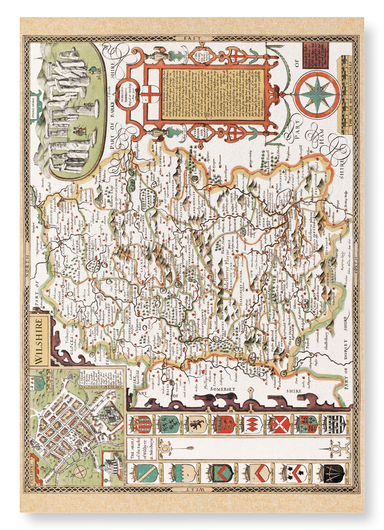
From The Theatre of the Empire of Great Britaine (1611) by celebrated English cartographer John Speed (1552-1629). In the making of this map, Speed...
View full details
Art Print
From The Theatre of the Empire of Great Britaine (1611) by English cartographer John Speed (1552-1629). Speed labels North Burcombe 'quaere' (query...
View full details
Art Print
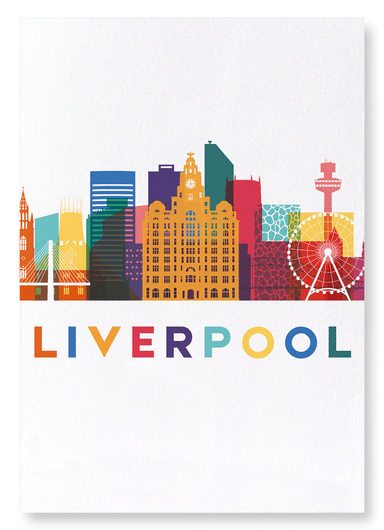
Liverpool measures 43.2 square miles (111.8 km2). The city impressively holds the Guinness Book of Records for being the "Capital of Pop". No other...
View full details
Art Print
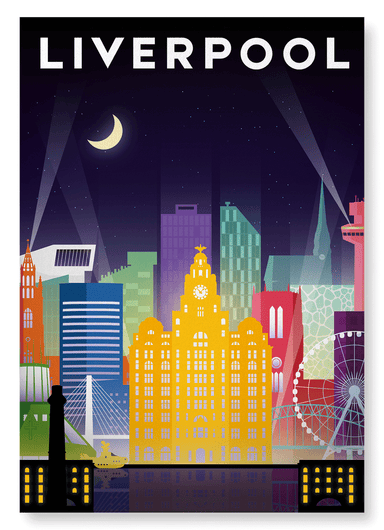
Liverpool measures 43.2 square miles (111.8 km2). The city impressively holds the Guinness Book of Records for being the "Capital of Pop". No other...
View full details
Art Print
The county of Gloucestershire is home to Gloucester Cathedral which has the Crecy Window which is the biggest stained-glass window in the UK. Furth...
View full details
Art Print
Pissarro painted this from his balcony at No.1 Gloucester Terrace, with Kew Green in the foreground, Kew Road to the left, and River Thames behind ...
View full details
Art Print
Similar to several other great artists, Pissarro found refuge in London to escape the Franco-Prussian war and first visited in 1870, and revisited,...
View full details
Art Print
Camille Pissarro worked mainly in the Paris area but painted in London during visits. Similar to several other great artists, he found refuge in Lo...
View full details
Art Print
This steel engraving of Liverpool was drawn and engraved by John Rapkin and published by English cartographer John Tallis. The upper illustration, ...
View full details
Art Print
This map of Liverpool by American cartographer George Washington Bacon shows a detailed view of the streets of the city. We can particularly observ...
View full details
Art Print
Map of Liverpool published in 1836 by Chapman and Hall. Some of the most famous landmarks of the city are showcased in the lower part.
Art Print
A 1926 image from "Wonderful London" with the caption: "Here we are back in the heart of London... A rainy night has driven folk indoors and the la...
View full details
Art Print
The pink version of the union jack was popularised by British artist and photographer David Gwinnutt, creating the Pink Jack in an art exhibition i...
View full details
Art Print
Titled "Brightstowe, vulgo" was published in Cologne in 1588 in the book Civitates Orbis Terrarum (Towns of the World). The sheep showing in the ma...
View full details
Art Print
A detailed 1851 map of Scotland, featuring an inset of the Shetland Islands, showcases illustrations of local landmarks and daily life. Scotland's ...
View full details
Art Print
For centuries until the kingdoms in the UK united, the flag of the union jack was restricted to use at sea. This was the likely origin of the name ...
View full details
Art Print
The tennis courts in Wimbledon are sown with perennial ryegrass, and is in fact, the only Grand Slam event in the world that is played on grass.
Art Print
1919 saw the first street parties organised by residents on a mass basis, as part of the Peace Treaty celebrations. This uniquely British tradition...
View full details
Art Print
The tradition of lighting the store began with its Christmas lights in 1959 when 1,100 bulbs were used for the decorations. Harrods is lit up at ni...
View full details
Art Print
One of the most well-known features of the cathedral is the Whispering Gallery, which is 259 steps up the magnificent dome and 30 metres from the c...
View full details
Art Print
In the early years, the Union Jack was usually restricted to use at sea, which most likely is the origin of its name, since it was flown from the ...
View full details
Art Print
London was the first city to reach a population of more than one million in 1811. It is still the world’s largest financial centre.
Art Print
“Art Deco” comes from the French phrase “Art Decoratif” - a style first showcased in 1900 at the Universal Exposition in Paris. From the 1920s, the...
View full details
Art Print
France and England were the first to have double decker buses dating as far back as the 1820’s when they were horse drawn.