Greeting card
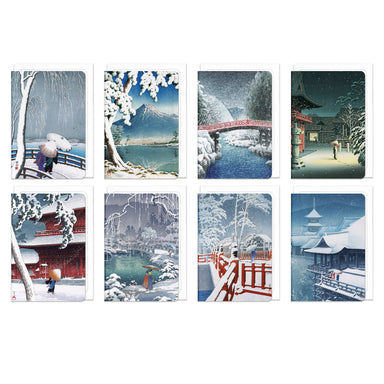
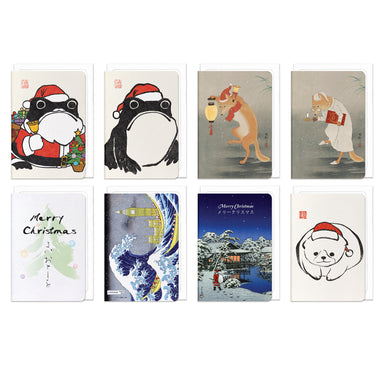
8 Cards - Japanese Christmas Designs
Size: (148mm x 105mm)Luxury pearlescent eco certified paper
Greeting card
Size: (148mm x 105mm)Luxury pearlescent eco certified paper
Greeting card
Greeting card
Text on the reverse side: Illustration by John Leech from the novel 'A Christmas Carol.' The term “bah humbug!”, used by the character Ebenezer Sc...
View full details
Greeting card
Text on the reverse side:A contemporary ribbiting opera adaptation of a Japanese woodblock print dating 1814. The Japanese word for frog is “kaeru”...
View full details
Greeting card
Text on the reverse side: Illustration from the botanical book ‘The Temple of Flora’. The begonia is mildly toxic to humans and animals where inge...
View full details
Greeting card
Text on the reverse side: The cranes symbolise elegance and longevity. The insignia ‘hyungbae’ system displayed the ranks of officials in the Jose...
View full details
Greeting card
Text on the reverse side:The Mughal painting depicts the ancient tale of Wag-wag, a mythical island believed to be populated by creatures possessin...
View full details
Greeting card
Text on the reverse side:The Universal Larousse was a combined dictionary and encyclopaedia. The dictionary focused on the presentation of French l...
View full details
Greeting card
Text on the reverse side:Bird and flower painting is considered one of the treasures of Chinese culture. It is inspired by the beauty of the multit...
View full details
Greeting card
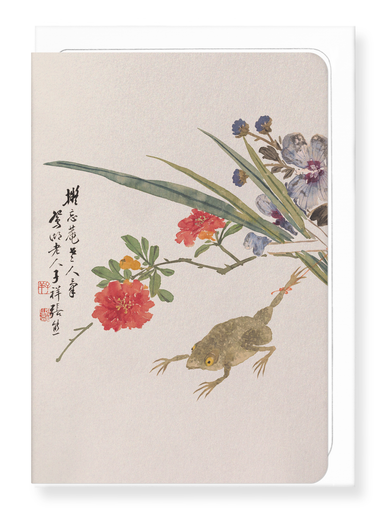
Text on the reverse side:In Chinese culture toads are considered auspicious animals and appear in many folk tales and proverbs. They symbolise immo...
View full details
Greeting card
Text on the reverse side:Depicting harmony with nature and enriched with symbolism, the genre of bird and flower art has remained a favourite in Cl...
View full details
Greeting card
Text on the reverse side:Odilon Redon’s dreamy images of nature were heavily inspired by Japanese art. Redon’s later works, of somewhat abstract su...
View full details
Greeting card
Text on the reverse side:The poplar trees stood along the bank of the Epte River near Monet’s Giverny estate. Monet’s poplars became a series of pa...
View full details
Greeting card
Text on the reverse side:A contemporary purple adaptation of a woodblock print from 1814 by Matsumoto Hoji. The Japanese word for frog is “kaeru”, ...
View full details
Greeting card
Text on the reverse side:A contemporary red adaptation of a Japanese woodblock print dating 1814. The Japanese word for frog is “kaeru”, which can ...
View full details
Greeting card
Text on the reverse side:The 16th century saw an increasing popularity and availability of printed books. Patterns texts alongside samplers, allowe...
View full details
Greeting card
Text on the reverse side: The skeleton features as a regular subject in Kyōsai's works. This image from Kyōsai Manga depicts animated skeletons le...
View full details
Greeting card
Text on the reverse side:Image of a woodblock print by the Japanese artist Kawanabe Kyosai. He published the magazine Eshinbun Nipponchi in 1874, w...
View full details
Greeting card
Text on the reverse side:This design is filled with auspicious symbols, with the iris symbolising purification and protection, the peony representi...
View full details
Greeting card
Text on the reverse side:In classical mythology, Iris was the goddess of the rainbow - the link between heaven and earth. She was also regarded as ...
View full details
Greeting card
Text on the reverse side: Traditionally the evergreen pine is regarded as a symbol of good fortune, longevity and steadfastness. The regal black w...
View full details
Greeting card
Text on the reverse side:The way cats wash their faces licking their paws and wiping their face - it is as if they are inviting good luck beckoning...
View full details
Greeting card
Text on the reverse side:Eric Ravilious (1903-1942) British painter, book illustrator, and designer, who grew up in Sussex. He is particularly know...
View full details
Greeting card
Text on the reverse side:Clapperboards help with the synchronisation of picture and sound in film and video production. The iconic instrument has b...
View full details
Greeting card
Text on the reverse side:The lotus flower symbolises the ability to rise and grow from any situation. Ogawa Kazumasa (1860-1929) is renowned for hi...
View full details
Greeting card
Text on the reverse side:Due to the payments that need to be made to film studios to show the films, unknown to many, cinemas actually generate mor...
View full details
Greeting card
Text on the reverse side:Just like you, every star in the night sky shines brighter than the sun.
Greeting card
Text on the reverse side: Birds are associated with development, and with their ability to soar across the skies, they symbolise the capacity to e...
View full details
Greeting card
Text on the reverse side:Ducks symbolise protection, adaptability, emotional strength and the gift of intuition, whilst representing the importance...
View full details
Greeting card
Text on the reverse side:The first record player was commercially released to the masses back in 1895. The 60s and 70s became the golden age of vin...
View full details
Greeting card
Text on the reverse side:If a customer wished to see one of the high class “oiran” courtesans, they would first have to go via the “chaya” (tea hou...
View full details
Greeting card
Text on the reverse side: The 1952 American musical romantic comedy, which was directed and choreographed by Gene Kelly and Stanley Donen, was not...
View full details
Greeting card
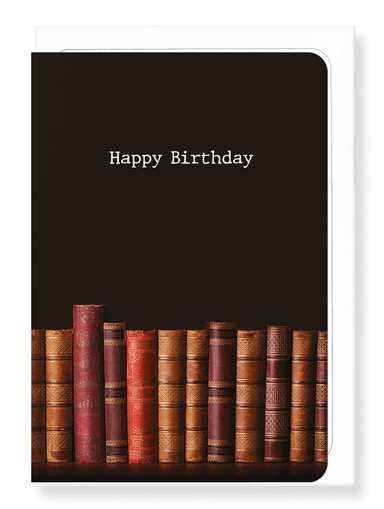
Text on the reverse side:There are numerous benefits that come with reading. One benefit was confirmed via a study which found how the act of readi...
View full details
Greeting card
Text on the reverse side:During his stay in Saint-Rémy-de-Provence, Van Gogh painted over 15 versions of olive trees. The tree was dear to the arti...
View full details
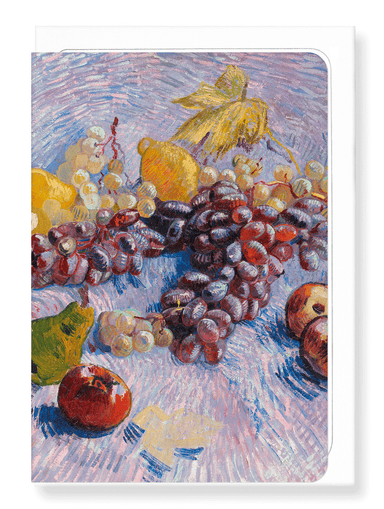
Greeting card
Text on the reverse side:Fruits are often seen as a symbol of abundance an plentifulness. Artwork by Vincent van Gogh (1853-1890).
Greeting card
Text on the reverse side:As the poplar tree is known for growing quickly even from broken branches on the ground, it is commonly associated to cour...
View full details